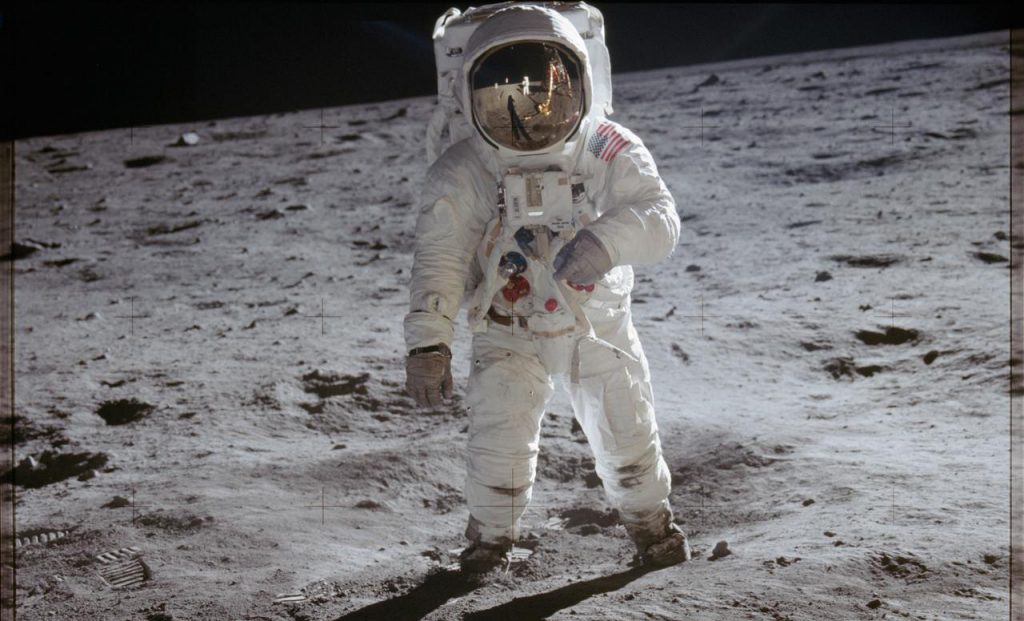
With the return of the Artemis II crew on April 10th, 2026, Nasa has finally ended a 50 year break from in depth space exploration. The Apollo missions stemmed from a want to win the space race, the Artemis program strives for a long term stable presence on the moon.
Tim Shackleford a high school Earth and Space teacher at North Central sees these missions as demonstration that space exploration wasn’t just something of the past.
“This is where we’re headed, right? Like the Apollo missions, they first got us there” Shackleford said, ”but now we can go further and further.”
Space Exploration has returned to the center of media across the nation, inciting classroom discussion amongst students. While some details about space exploration can be hard to grasp such as orbital mechanics, students are curious and asking questions.
“Definitely a lot of kids were asking questions about Artemis and wanted to know about it,” Shackleford said.
When learning about space students often rely on intuition as students have lived on earth their entire lives, their gut feeling on how things are supposed to work is often wrong.
“Your intuition often will just fail you,” Shackleford said.
Students also struggle to grasp the sheer size of space. While everyone knows space is big, the distance between earth and other planets or the moon is a hard concept to conceptualize.
“Distances are a huge one, we’re 400,000 kilometers from the moon. It’s not small at all. And then we’re 150000000 kilometers from the sun. Jupiter is five times further than that. Pluto is 50 ish times further than that. That’s like just in our solar system, right? It’s really hard to grasp your mind around just how big space is,” Schackleford said.
Along with capturing the public’s attention nationwide, which is not its sole purpose, it serves as a technological trial. Gonzalo Ordonez, the Chair of the Department of Physics & Astronomy at Butler University, views these missions through a scientific lens, understanding that we have to master the hardware before we can explore deep space.
“[Goal of mission] Test the ability of the main (SLS) rocket and rocket boosters to bring a heavy payload to Earth orbit and the ability of the Orion spacecraft to bring people to the Moon,” Ordonez said.
Said tests are a vital part of the process before anyone can step foot on the moon’s surface.
“It will prove the safety of the system needed to bring astronauts to a Moon orbit, which is an essential step for a Moon landing and a successful return to Earth,” Ordonez said.
This mission was also a test of survival as the Orion capsule is equipped with new life support systems, designed to make the trip safer and more comfortable.
“They have a new life support system, including a toilet! There’s also a new Launch Abort System to save the crew in case of failure during takeoff,” Ordonez said.
Spacecrafts endure extreme conditions during the trip to the moon and back and safety remains as the highest concern. Even with updated systems most things are based on data from the Apollo era.
“The orbital calculations, rocket and spacesuit technologies are based on older work during the Apollo program. The heat shield protecting the return capsule uses the same material,” Ordonez said.
The journey home is the most dangerous part of the mission. The capsule must endure a high speed entry through the earth’s atmosphere pushing said capsule to its limits.
“The biggest risk is the return back to Earth, when the heat shield will have to resist the enormous temperatures caused by friction between the air and the capsule, which will be travelling at 24,000 mph,” Ordonez said.
The mission provides useful data that cannot be obtained on earth. Even before landing the spacecraft is monitoring how jarring the effects of space are on technology and the human body.
“Data collected will include space radiation levels and space-environment measurements, as well as human-physiology responses to space travel,” Ordonez said.
The ultimate goal of returning to the moon is to build a foundation for the future. The moon is now a resource for elements and a stepping stone into the rest of the universe.
“The Moon can provide rare elements or metals like Titanium or Helium 3. A lunar base will set up a new frontier for humanity,” Ordonez said.
As students watch these events happen in real time, a spark can form for their own careers inspiring the next generation with a real world example, something a textbook can’t provide.
“This type of mission can be fascinating to many people and will surely inspire many students to pursue STEM fields,” Ordonez said.
As the Artemis project continues to move forward, it continues to provide a world example that closes the gap between textbooks and reality. For students watching everything live the moon isn’t just a dot in the sky anymore it’s somewhere they could potentially end up.
“It’s nice to have that tangible thing. Hey, we’re going there,” Shackleford said.