When people look at an athlete, the first that most think of are the highlights, the stats, and the wins. Sports look so simple watching from the sidelines. Try hard, no mistakes, be tough. It’s simple until one realizes how stressful it can truly be.
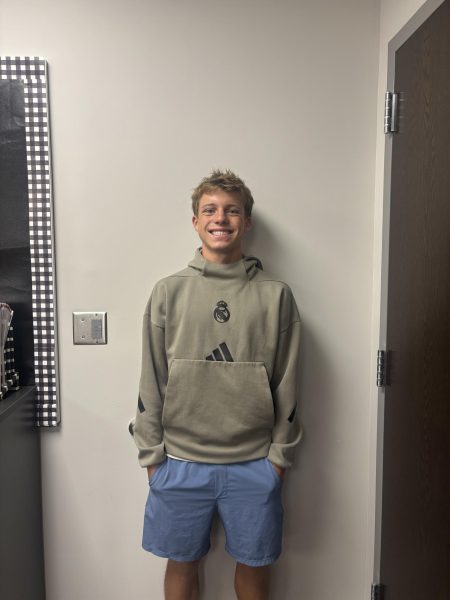
Pressure starts to build as players climb the levels. Along with pressure comes stress. For sophomore Cy Street, this pressure began when he realized he wasn’t the best anymore.
“I started feeling pressure around my freshman year,” Street said. “There were multiple teams to compete for and I wasn’t the best anymore.”
For a lot of athletes, that’s how it goes. It’s not one big game or moment, but a slow process. An awareness that performances are constantly being evaluated, that standards are constantly rising and athletes either have to reach these standards or be left behind.
Pressure not only comes from coaches or competition. It can even stem from home.
“I felt pressure from my dad because he wanted me to succeed more,” Street said.
Time is often a student athlete’s biggest struggle,something they can never have enough of. Balancing school with practice and a social life can be a nightmare. When school’s over, practice starts. Then, once practice is over, homework chores and other responsibilities. Finally, Sleep, something so vital to excel on the field and in the classroom which often neglected to fit everything else in.
“School, working, sports are super hard because practice seven days a week. I just have no time to do homework,” Street said.
Social media has become a source of comparison among young athletes. Now it’s not just among the peers that are in the same or in the same state. Social media gives athletes access to all their peers. This can be extremely demoralizing seeing kids close in age excelling when they are not.
“It’s pretty bad because, when you see the top players in the state, they’re throwing 90. It makes you look down on yourself,” Street said.
A lot of athletes don’t talk about their emotions with anyone, they just bottle them up and put them back into their sport.
“I go to no one, I just go to practice when I feel overwhelmed,” Street said.
Practice becomes the root of the problem but also the only escape creating a cycle.
The future is a massive cause of stress among student athletes. With athletes wanting to pursue their sports further they are dependent on their mind and body to keep producing a good enough performance.
“College is a big deal because my parents don’t really have the money to pay for my college stuff. I’d have to get a scholarship of some sort,” Street said.
While these pressures develop early on in athletes careers, their effects often increase over time.
Not only do high school athletes deal with mental health struggles revolving around athletics, collegiate athletes often face more pressure, but also get more in return.
Leah Berg, a Division Three soccer player at New York University, has experienced how athletic pressure can follow you post high school.
“I think being a student athlete has positively affected my mental health in two main ways, the friendships and the unique opportunities,” Berg said.
Being a student athlete brings upon stress and fatigue, but dealing with that can also build resilience.
“Being a student athlete has affected my mental health negatively, through causing a lot of stress, burnout, loss of sleep, and anxiety around fear of failure,” Berg said.
Physical issues are easily seen and dealt with, while some of the most difficult struggles are not as easy to notice. Self doubt and identity crises are often left untreated and can be more detrimental than physical ailments.
“What first comes to mind for this is definitely identity,” Berg said. “I tend to tie my self worth to how I’m doing in my sport or how I’m doing in school.”
When things go wrong, bad practice, bad game, the impact can be massive.
“I literally have an identity crisis,” Berg said.
For Berg, being a student athlete is all about sacrifices and deciding which part of your life you’ll have to sacrifice that day.
“You can’t be everywhere at once, and you can’t expend an infinite amount of energy,” Berg said.
From a very young age athletes have been taught to be tough, not talk about problems and push through things. Over time, this mindset can turn the sport athletes love into a place of fear and depression.
“Mistakes in practice are reasons for you to not be rostered for the next game, or get less playing time,” Berg said.
Injuries can be much more than a physical struggle, they can be intensive struggles with mental health, especially during periods where active recruiting takes place.
“The club season of my junior year. During practice, I broke my ankle. It was really bad and this triggered a lot of anxiety and stress because it was in the middle of my recruiting season. Suddenly, I was at a huge disadvantage with recruiting and I was kind of in a really big pickle,” Berg said.
The fear doesn’t end even once the injury is healed.
“I was in a slump for months because I was so scared of getting hurt again while I was coming back. So I was holding myself back in order to get better, which then was making me think I wasn’t playing well. But I didn’t want to change anything because I was scared to get hurt again, so it became a cycle and led me to spiral,” Berg said.
When people watch sports, no matter the level, they assume the player is just an athlete, but not only are they athletes they are people too.
“I wish all three parties (parents, fans, and media) saw athletes as not just athletes but also people,” Berg said.
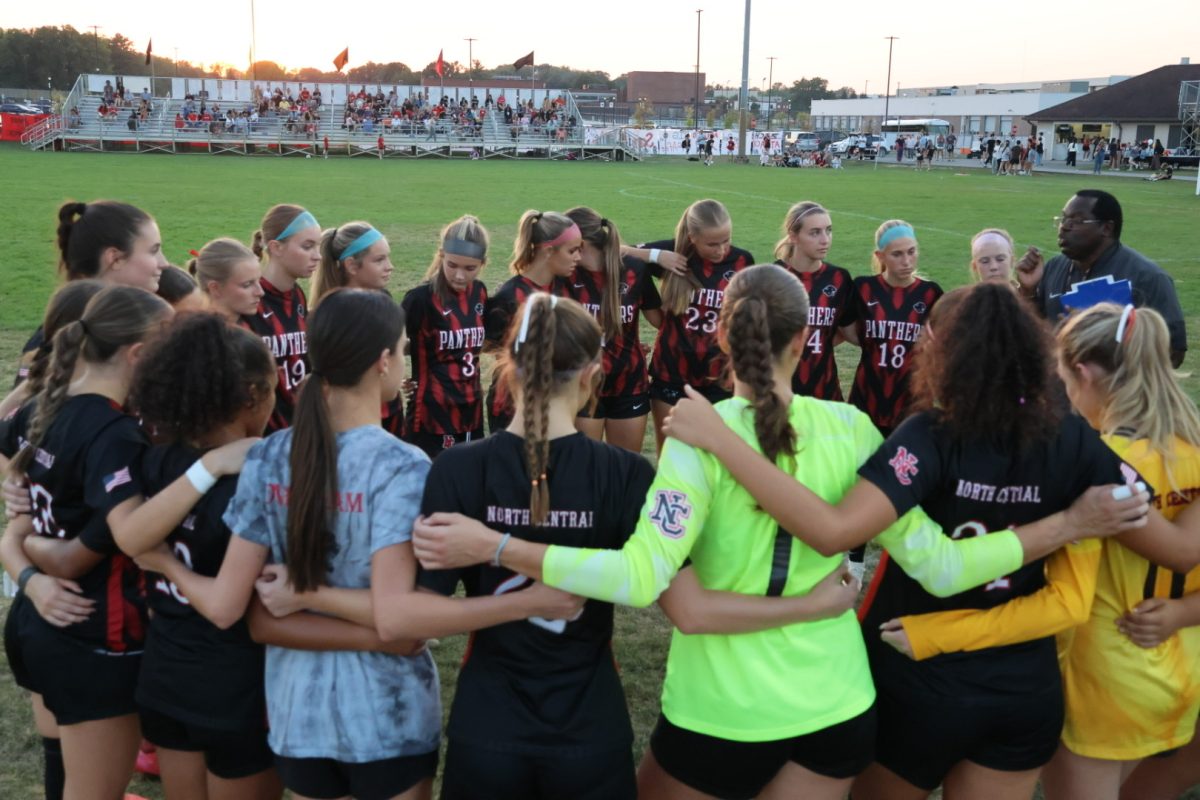
Coach Daniel Flores, a coach at the high school and the collegiate level is aware of the pressure athletes face and how it’s enhanced with the influence of social media and money.
At the collegiate level, there are a lot more factors to just playing your sport.
“With several factors which are transfer portals, NIL and scholarships,” Daniel Flores said.
With updates in NCAA rules and regulations now allowing their players to be paid this is an extra pressure and can bring the constant sense that your value can be measured.
“There’s value on your stats, on your highlights, and where you commit,” Flores said.
The major difference between playing in college and in high school is loyalty, college players playing in a big conference division have aspirations to go pro and everything they do is for self benefit. This can be found in high school soccer, although it is a rare occurrence.
“There is some sort of school pride, connections to friends. There’s a beauty of playing for your high school,” Flores said.
Coach Flores has observed over the years that a lot of issues in the classroom and on the field stem from familial issues.
“If there’s stuff happening within your family, if you don’t have your family circle supporting you and being around you, it is really hard for you to perform and be mentally 100% in every match,” Flores said.
The things that happen off the field and outside of the classroom have the biggest impact on everything that happens in them. When student athletes are striving, they likely have a strong support system.
“Guys who are, caring about the team, being on time for class, for practices, performing, who are making a mistake, and staying positive. They’re cheering for their teammates. They care for the team. You start looking around their circle, their family circle usually, and that could be friends too,” Flores said.
Athletes typically do not open up and talk about issues bothering them, even though being vulnerable is in a way being strong and brave.
“Sharing emotions, and being vulnerable is really, really, really good,” Flores said.
Getting athletes to open up can be a challenge, the environment matters and trust is a big part. Coach Flores tries to build trust by being vulnerable and taking accountability for his actions.
“I make sure I apologize. I’m going to apologize in front of the team,” Flores said.
Coach Flores believes that identity has to be bigger than your sport. A point which should remain a focal point of mental health in athletics.
“It’s just soccer,” Flores said. “You’re a sibling, you’re a son, you’re a friend, you’re a boyfriend or girlfriend there’s all these things before you’re a soccer player.”
Mental health doesn’t always appear in forms of sadness. Sometimes it can be a comparison and not thinking you’re good enough. Sometimes it can be a kid idolizing their sport only finding joy in success. Sometimes it can be a kid who has no one to go to when they’re struggling. Sometimes it’s a kid pushing through because quitting seems like failure. Sometimes it can be a coach saying that vulnerability isn’t a weakness it’s a strength.
Mental Health experts say the difference between situational pressure and true struggle often comes down to the intensity and duration of the pressure.
“Sometimes it’s a situation like being nervous before a game and that’s something we can handle short term with coping skills,” Guidance Counselor Kristi Meinert said. “When it’s more long-term or more pervasive, that’s when we refer students to outside support.”
Across all different levels of sport, from high school to college, helping athletes with their mental health isn’t about getting rid of pressure or expectations, It’s about creating a safe space where athletes can be vulnerable so athletes don’t have to carry the burden alone. When coaches choose honesty and connection, they help athletes be human. Being vulnerable is a sign of strength not weakness.
“Be able to be vulnerable, embrace the pain and embrace like suffering and like, you embrace like, it’s going to happen. Guess what? We live in a broken world, Yeah, it’s gonna happen. It’s gonna happen again,” Flores said. “I know it’s a little harsh. But if you, if you are sharing your emotions, you’re vulnerable, it will be less harsh.”